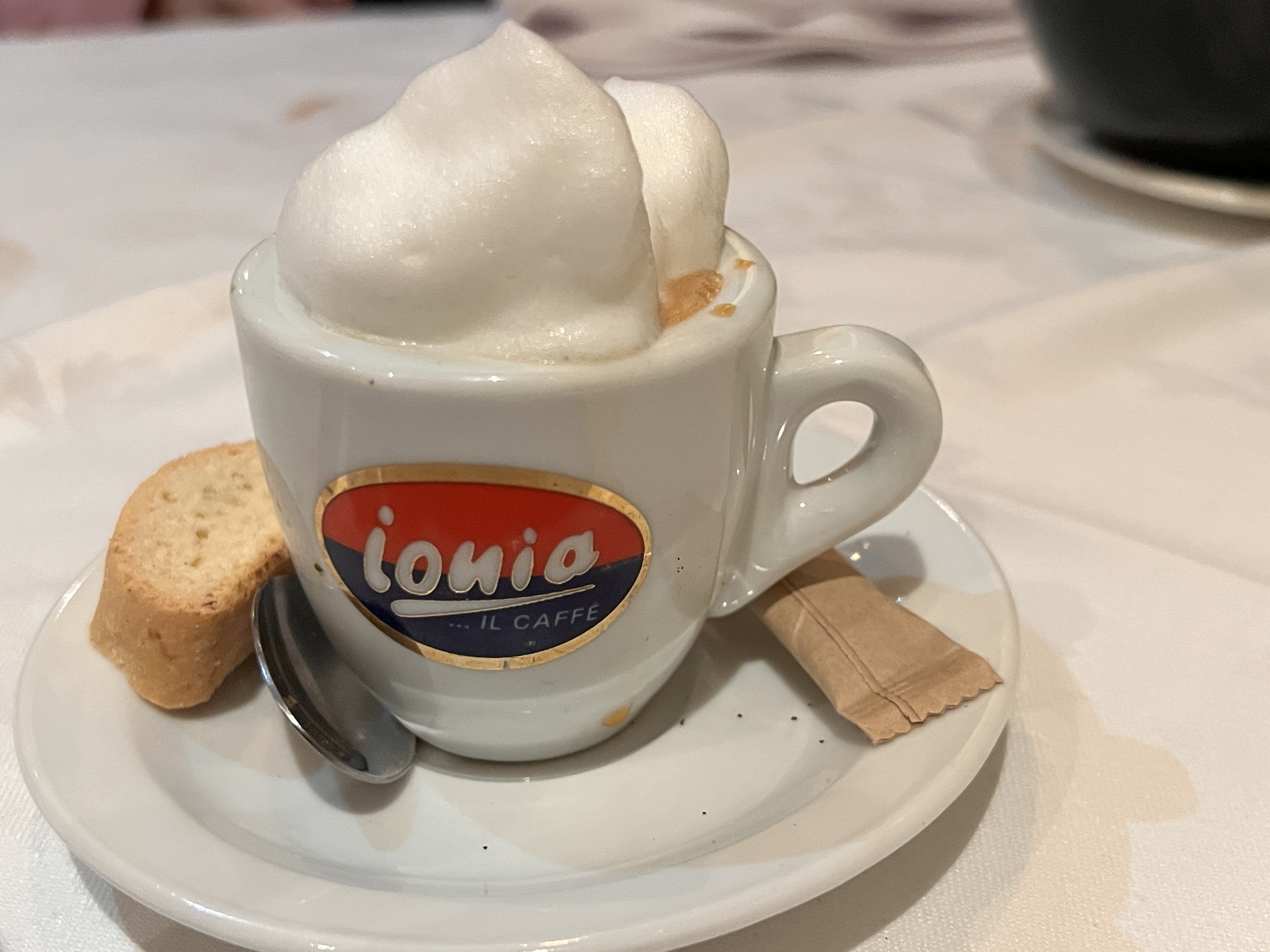
My partner and I just returned from two weeks in Italy, not just for reporting on gelato but for the sunshine and fantastic food, too. Well, maybe for the gelato.
I wanted to get to the bottom of the fundamental question on everyone’s mind – is the gelato better in Italy – than in Toronto, with its extensive and demanding Italian population? Sadly, I had not been in Italy for some time and my memory of my first gelato epiphanies at Giolitti’s in Rome are clouded in the fog of time.
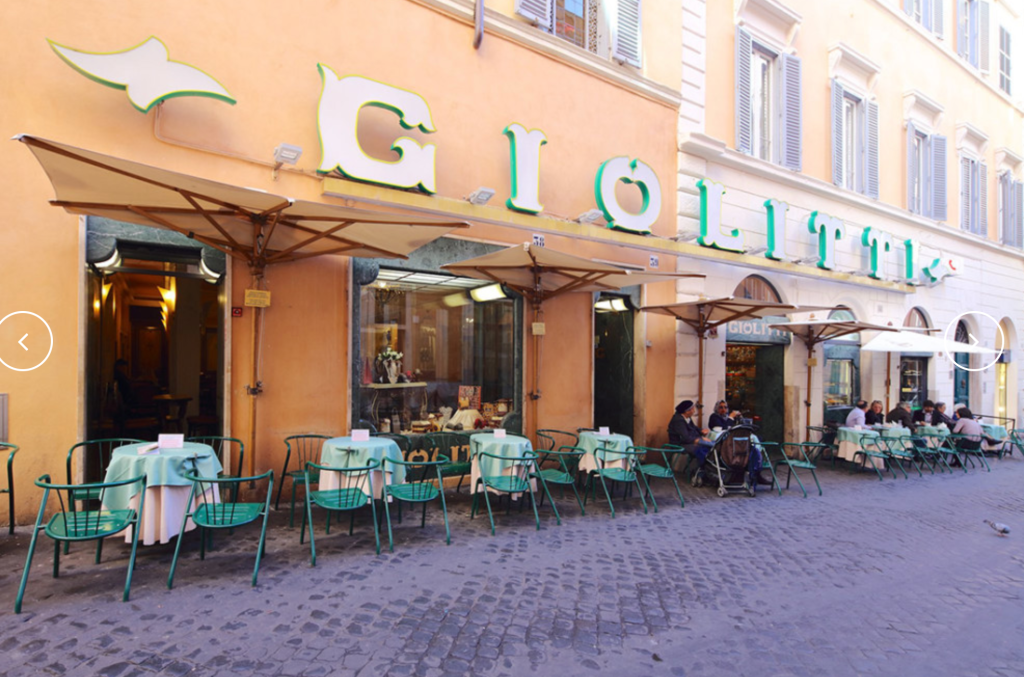
Inquiring minds want to know and the answer, and it is: yes, it’s definitely superior in some places but not everywhere. Not exactly the same but close in terms of quality.
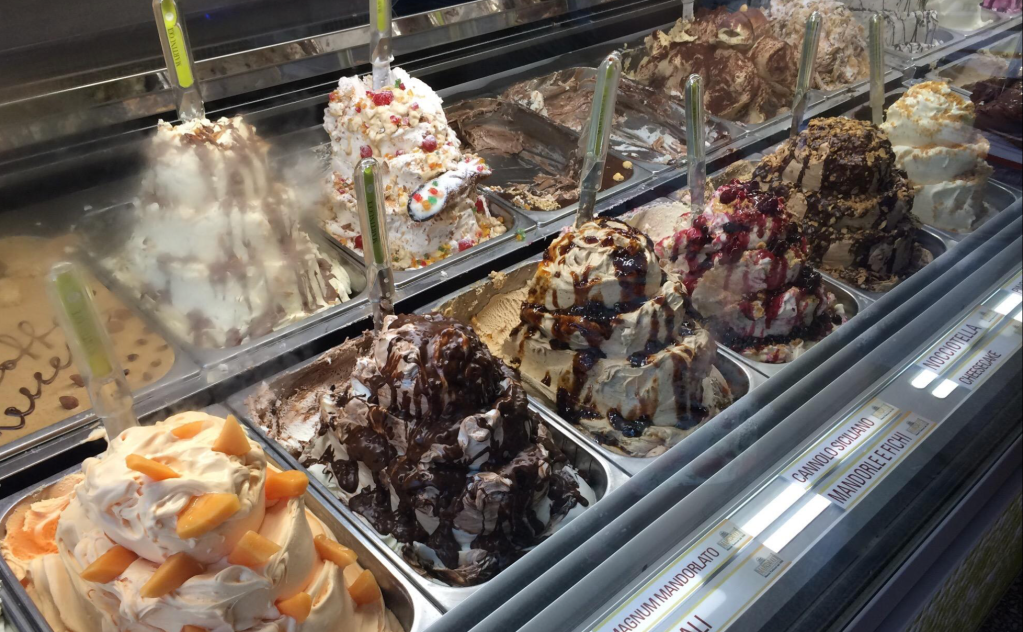
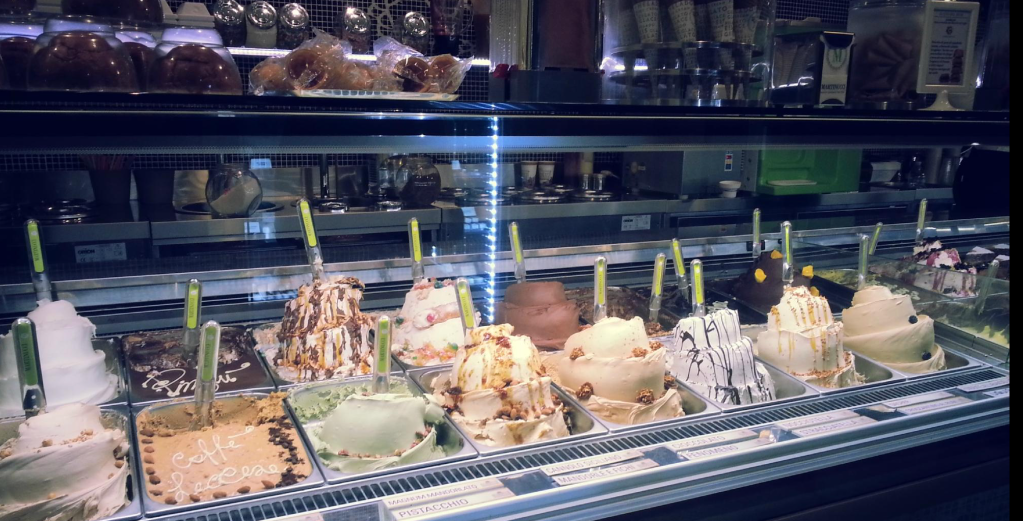
What you do find in la bella Italia is a broader range of flavours, highly dependent on seasonal fruits. There would be several kinds of chocolate in each shop: fondente, or very dark chocolate with no dairy; milk chocolate, chocolate with orange or almond; Ferraro Rocher and Baci, with chocolate and hazelnuts.
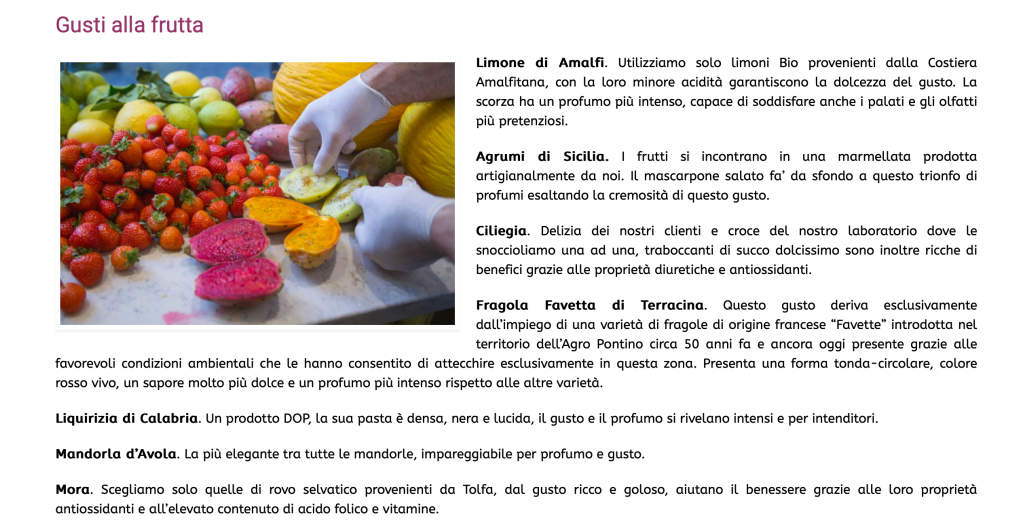
In Ostuni, in the Puglia region on the Adriatic coast, prickly or cactus pears were coming into season. The fruit, native to the Americas, is widely used in Mexico for drinks; it made its way to the New World and is popular in Italy where it’s called the Indian Fig. In Israel, it’s a sabra, which has come to mean native born, prickly and tough on the outside but sweet inside. (Less so in these terrible times for the Sabras).
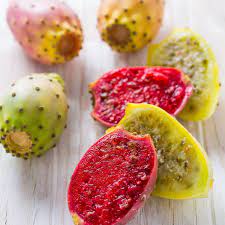
At a local market, the guide peeled one so we could taste it. Ripe, a bit sweet but somewhat bland. However, I saw ‘Indian fig’ in a gelateria store and had to try it. Probably one of the best flavours I’d had on the trip. How to describe it: it’s as if pumpkin was crossed with a cantaloupe. A touch of sweetness crossed with a deep squash like quality. Delicious! Fig also makes an appearance in gelato much more often than it does here. At the Ostuni’s Osteria del Perso, we had fig and local almond gelato for dessert at the best meal we had in Italy. It is also crossed with cheeses like mascarpone or ricotta. I made fig and mascarpone as soon as we returned, and it was delicious.
We visited Rome, Sorrento, Positano, Amalfi, Ravello and Capri in one leg of our trip. Then we crossed the ‘leg’ to the Adriatic side facing the former Yugoslavia and stayed in Lecce, where we had a great cooking class, with a trip to the heel, including Otranto, Castro and Gallipoli. (People come there thinking Gallipoli is the site of Churchill’s ill-fated World War I disaster in Turkey, which made a very good Mel Gibson movie, before he became a pariah). We next traveled to Ostuni, a hilly, white-washed town of many alleyways and stairs and trattoria everywhere spilling out in the passageways, a great way to live. We reserved the last day for the beach but after 13 days of total sunshine, it rained like mad, cats and dogs, and dogs and cats, all day.
Not wanting to stay inside, we rented the cutest little yellow FIAT Panda, with a one litre engine and set out for Monopoli, Polignano al Mare and Cisternino. Our friends raved about the beach in Polignano and the photos here show it empty but on sunny days it is wall to wall bathers.

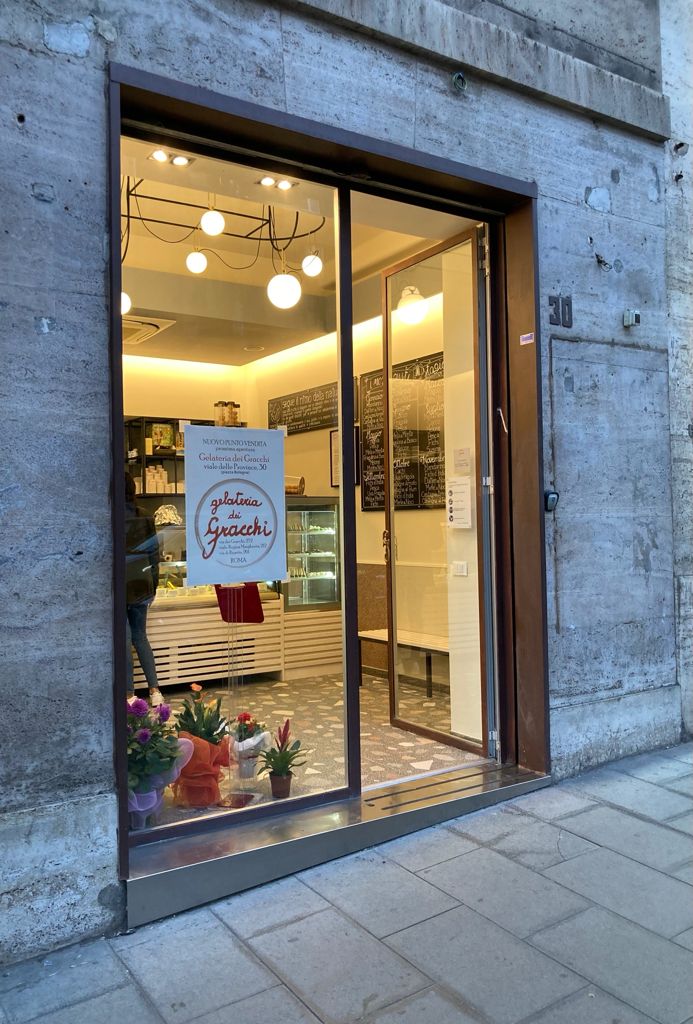
Before going, I asked Gelato Fresco’s Hart Melvin what his favourite Rome was and he answered, “Gelateria dei Gracchi. Best natural flavours and seasonal ingredients.”
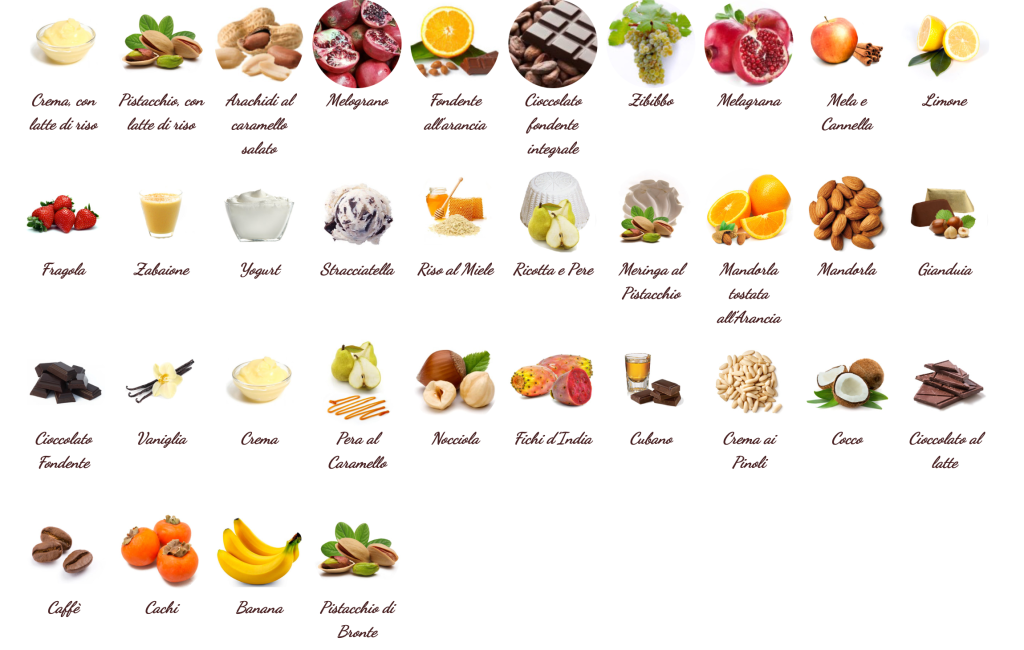
Its flagship flavour is pistachio and its owner Alberto Manassei guarantees is made with the highly prized and very expensive nuts from Bronte, Sicily.
They are considered the best in the world. On Amazon, a small bottle of pistachio cream, made with these pistachios, is $71 for seven ounces. No wonder Melvin liked this place; it’s made exclusively with natural products, without preservatives, colourings or hydrogenated fats. It follows the seasons and raw material’s biological cycle – all Italian and all local.
In Rome, the first place we went to, however, was the Gelateria del Teatro, near the beautiful Piazza Navona, and consistently on Rome’s Top 10 best gelato lists. It was a twisty turning walk through Rome’s narrow sidewalks and alleyways until we arrived. Stefano and Silvia, a married couple. operate this place and they are happy to share their story: “

Ours is a great love story that involves me and my partner in a great passion for ice cream,” Stefano writes, “that led us to discover (in Italy and abroad) new tastes, new flavors and the search for the ‘best gelato’ until, one day, we decided to open our own laboratory where our dreams could be realized.“At first we prepared ourselves by training at some of the best Roman gelateria where we were lucky enough to meet good masters who taught us the trade, then we put in our own effort, made up of imagination, professional insights, travel around the world and love and passion for this profession.”
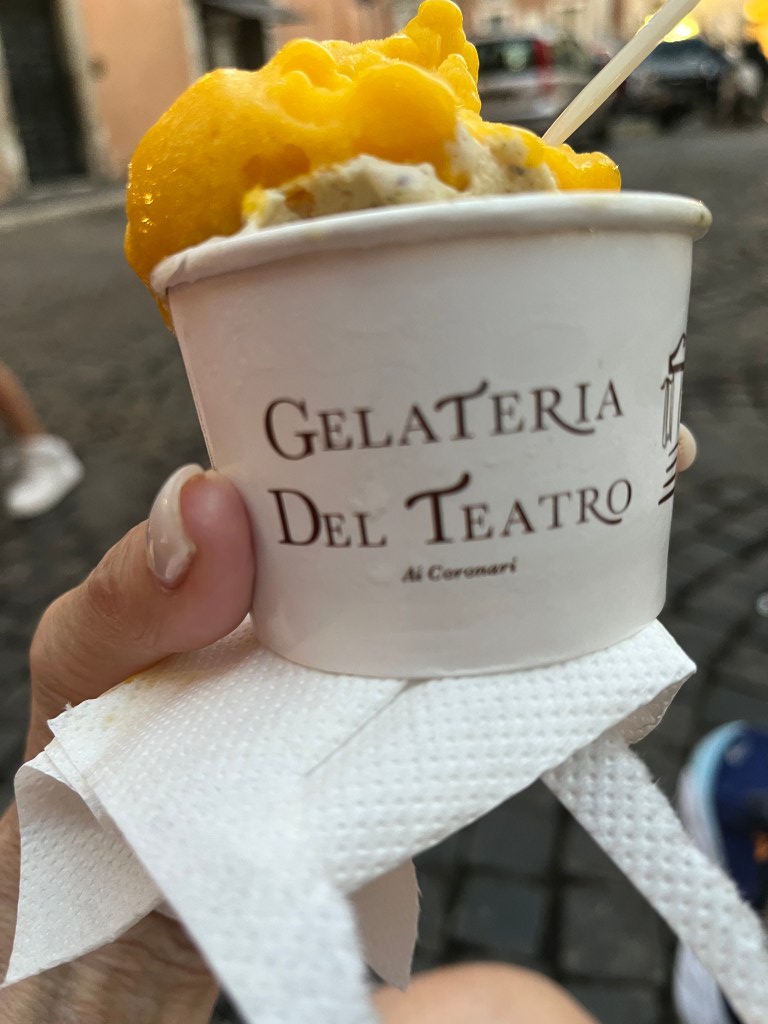
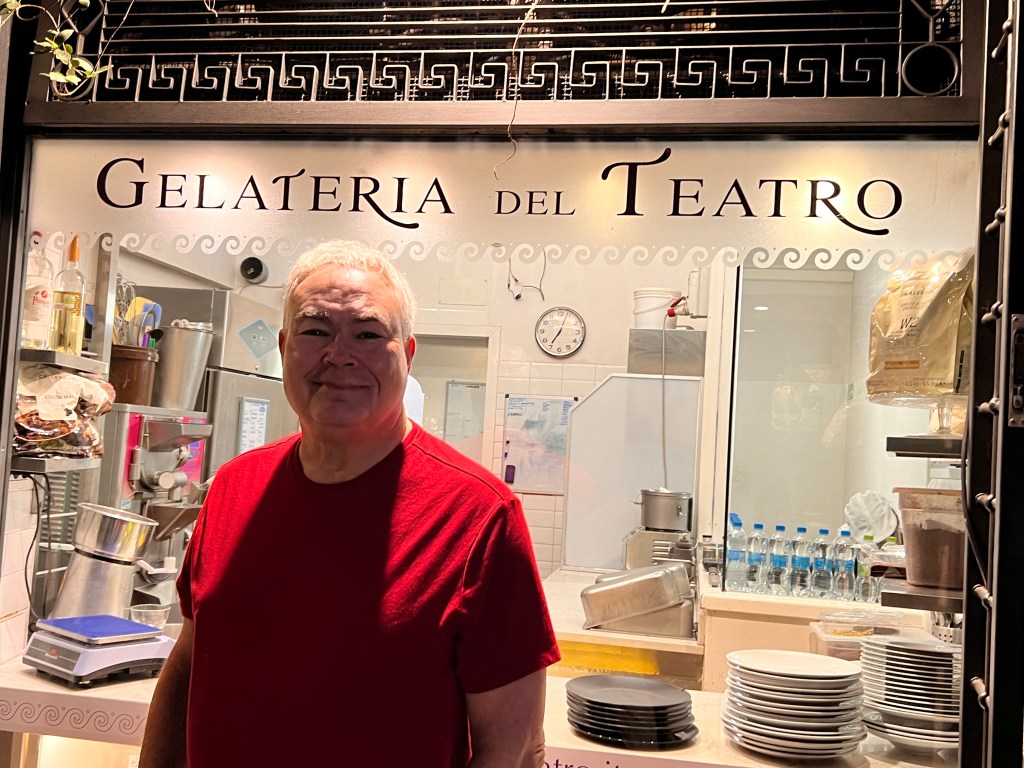
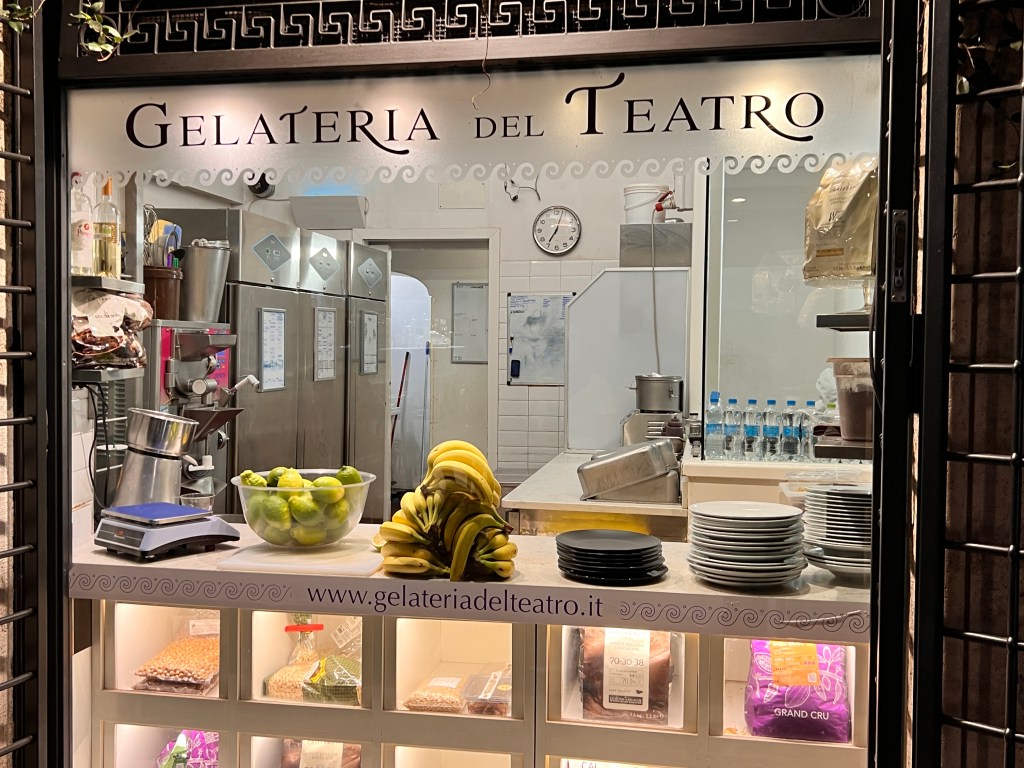
Now that’s how you become a Roman gelato master! Gelato del Teatro’s work philosophy is in line with the rhythm of nature, made up of cycles and periods in which products (fruit, vegetables, greens and flowers) have their seasonality. There was an exception made for a nearby school: faced with disappointed faces at the answer. “No, there isn’t any strawberry, it’s out of season,” Stefano broke down and promised to make strawberry ice cream all year round. Italy offers a vast variety of ‘brand of origin’ products and involve many of its regions, Sicily (Bronte Pistachio), Campania (Amalfi Lemon), Lazio (Terracina strawberry), Piedmont (Alba hazelnut). In numerous gelateria like Teatro, these names are proudly offered. Think of the hard work: there is time spent selecting products, time dedicated to pitting the cherries, chopping the pistachios, passing blackberries through a sieve, preparing mint leaves, whipping cream in small quantities even 10 or more times a day to keep it always fresh. Then with all that, then there is the time dedicated to reconciling the processing techniques with research to obtain ice creams with real, clear and clean flavours. On this point Stefano says he is ‘not very malleable.’
We also visited gelaterias in every other city we visited and next week’s report will be on that. And there are more profiles soon to follow.
 Ricardo's Gelato and Food Blog