
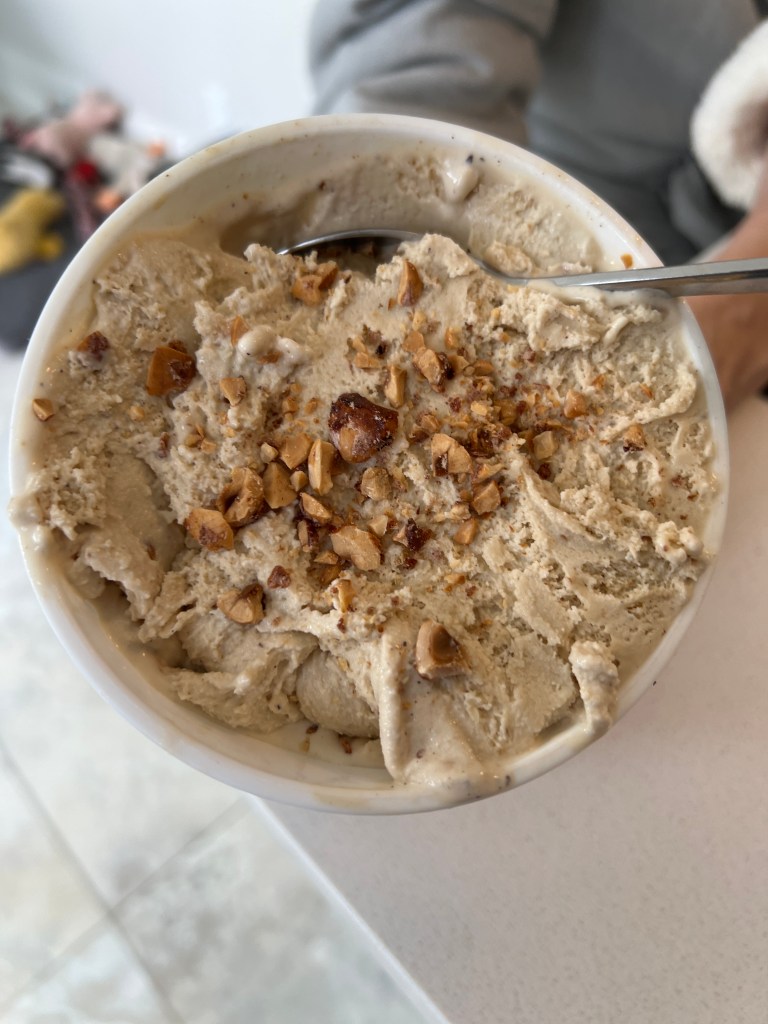
“The secret to the deep hazelnut flavour of this gelato is slow roasting the nuts until they are a dark golden brown and deliciously aromatic,” Mario Batali* writes in his Molto Gusto cookbook. He advocates roasting them for 25-30 minutes and says, “Be brave…this is what gives this gelato its intense flavour.” And he is right; Martha Stewart only advocates 8-10 minutes, not enough time. In taking the best of both worlds, here is a recipe, combining both chefs’ – and Ricardo’s – ideas. *(Yes, Batali and Stewart were disgraced but their recipes were the best)
- Preheat oven to 350F (or 176C).
- On a baking sheet, roast at least two cups of Basse or other raw hazelnuts for 25-30 minutes, until they are fragrant and almost give off a slightly burnt aroma. (Other brands available on Amazon.ca).
- Just before the nuts are done, bring two cups of milk to a simmer in a heavy sauce pan, like a Le Creuset or something similar. Remove from heat.
- When the nuts are done and still warm, use a food processor to grind them coarsely, somewhere between a powder and a paste. Be careful to avoid a paste, as this brings out oils you want to save for the steeping.
- Here is the controversial part: it’s not necessary to peel them. (If you feel that’s important, then use a towel to scrape them together to remove the skins). However, as you will be steeping them in milk for a relatively limited time, the skins will only add to the flavour, and not provide unwelcome acidity; this is the benefit of grinding them while warm.
- Stir the nuts into the hot milk, cover and let them steep for at least 45 minutes.
- Then strain the milk through a fine mesh into the saucepan, making sure you have at least three cups still; the nuts tend to absorb some of the liquid. (Reserve some for chopping into the gelato as it’s almost finished).
- Add one cup of heavy cream* and ¾ cup of sugar; then heat to dissolve. (I always lower the sugar content of most published recipes, as they turn out too sweet but if that’s your preference, use the full cup).
- Egg yolks are in many gelato and ice cream recipes and are a natural emulsifier, binding water and fat and helping to obtain a smooth, creamy texture while incorporating more air in the finished product. Batali advocates for a stunning 10 egg yolks and Steward suggests five. Four or five will do as the Serious Eats study proves; beyond that the difference cannot be discerned.
- With an immersion blender or whisk, mix an additional ¼ cup of sugar and a pinch of salt until the eggs are pale yellow.
- Temper them by mixing small quantities of warm milk in the eggs and gradually whisk; once a cup or so is incorporated, add the egg mixture back to the milk. This is done so the eggs don’t scramble though later the mixture is poured through a sieve one more time.
- Chill overnight and churn in a Cuisinart or similar ice cream machine. Add a few chopped roasted nuts for texture and flavour.
 Ricardo's Gelato and Food Blog